

What is the service life prediction method of forged grinding balls?
Apr 01, 2026
Hey there! As a supplier of forged grinding balls, I often get asked about the service life prediction method of these essential industrial tools. In this blog, I'll share some insights on how we can estimate the service life of forged grinding balls.
Understanding Forged Grinding Balls
Forged grinding balls are widely used in the mining, cement, and other industries for grinding materials. They are made by forging high - quality steel, which gives them excellent hardness, toughness, and wear resistance. Different sizes and compositions of forged grinding balls are available to meet the specific needs of various applications. For example, we have 125mm Steel Ball for SAG Ball Mill, which is designed for use in semi - autogenous grinding (SAG) ball mills. These large - sized balls are capable of handling heavy - duty grinding tasks in the mining industry.
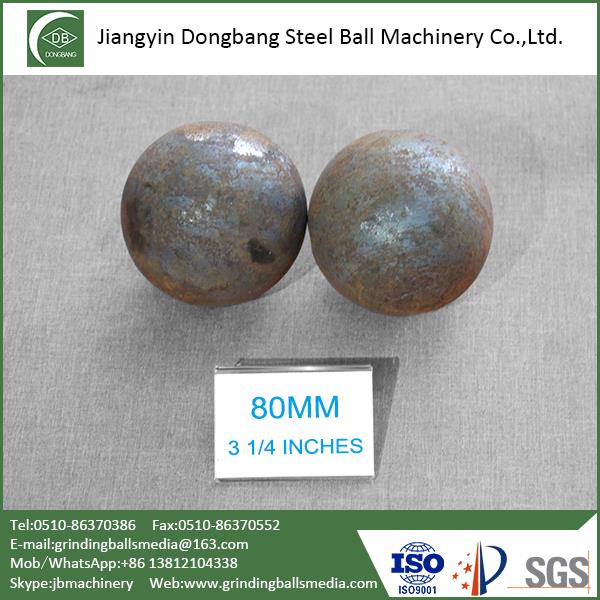
Another popular product is the Grinder Balls for Silver Ore Mine Mineral Processing. Silver ore mining requires precise and efficient grinding, and these balls are engineered to provide optimal performance in such environments. And the 80mm Steel Grinding Media Balls for Mining are also in high demand, as they are suitable for a wide range of mining operations.

Factors Affecting the Service Life of Forged Grinding Balls
Before we dive into the prediction methods, it's important to understand the factors that can influence the service life of forged grinding balls.
1. Material Properties
The quality of the steel used in forging the balls is crucial. High - carbon steels with proper alloying elements tend to have better wear resistance. For instance, if the steel has a high chromium content, it can form a hard chromium carbide layer on the surface of the ball, which significantly improves its wear resistance.
2. Operating Conditions
The environment in which the grinding balls operate plays a major role. In a wet grinding process, the presence of water can cause corrosion, which may reduce the service life of the balls. On the other hand, in a dry grinding process, the friction and heat generated can also affect the wear rate. The type of material being ground also matters. Grinding hard and abrasive materials will cause the balls to wear out faster compared to softer materials.
3. Ball Size and Shape
The size of the grinding balls affects their performance and service life. Larger balls are generally more suitable for coarse grinding, while smaller balls are better for fine grinding. The shape of the balls can also impact their wear. Spherical balls are the most common, but non - spherical shapes may be used in some special applications.
Service Life Prediction Methods
1. Wear Rate Measurement
One of the simplest ways to predict the service life of forged grinding balls is by measuring the wear rate. This can be done by weighing the balls before and after a certain period of operation. The difference in weight divided by the operating time gives the wear rate. For example, if a ball weighs 10 kg at the start and 9.5 kg after 100 hours of operation, the wear rate is (10 - 9.5) kg / 100 hours = 0.005 kg/hour. Based on this wear rate, we can estimate how long the ball will last until it reaches a certain minimum weight or size.
2. Statistical Analysis
We can also use statistical methods to predict the service life. By collecting data from multiple grinding operations, we can analyze the relationship between various factors such as ball size, material properties, and operating conditions, and the service life of the balls. For example, we can use regression analysis to develop a model that predicts the service life based on these factors.
3. Simulation and Modeling
With the advancement of technology, simulation and modeling have become powerful tools for predicting the service life of forged grinding balls. Computational fluid dynamics (CFD) and discrete element method (DEM) can be used to simulate the grinding process and predict the wear of the balls. These models take into account factors such as the motion of the balls, the interaction between the balls and the material being ground, and the wear mechanisms.
Importance of Service Life Prediction
Accurately predicting the service life of forged grinding balls is crucial for several reasons. Firstly, it helps in planning maintenance and replacement schedules. By knowing when the balls are likely to wear out, companies can order new balls in advance and avoid unexpected downtime. Secondly, it allows for cost - effective operation. By optimizing the use of grinding balls, companies can reduce the overall cost of grinding operations.
How We Can Help
As a supplier of forged grinding balls, we not only provide high - quality products but also offer technical support in predicting the service life of our balls. Our team of experts can analyze your specific operating conditions, such as the type of material being ground, the grinding process, and the equipment used, and provide you with an accurate prediction of the service life of our balls.
If you're in the market for forged grinding balls and want to learn more about how to optimize their service life, don't hesitate to get in touch with us. We're here to help you make the most of your grinding operations. Whether you need 125mm Steel Ball for SAG Ball Mill, Grinder Balls for Silver Ore Mine Mineral Processing, or 80mm Steel Grinding Media Balls for Mining, we've got you covered. Contact us today to start a procurement discussion and find the best solution for your needs.
References
- Smith, J. (2018). Wear mechanisms of grinding balls in mineral processing. Journal of Mining and Materials Processing, 15(2), 45 - 52.
- Johnson, A. (2019). Statistical analysis of grinding ball performance. International Journal of Industrial Engineering, 22(3), 123 - 135.
- Brown, C. (2020). Simulation of grinding processes using CFD and DEM. Computational Mechanics Journal, 30(4), 201 - 215.