

What is the heat treatment process for forged grinding balls?
Jan 14, 2026
As a trusted supplier of forged grinding balls, I am often asked about the heat treatment process that goes into making these essential industrial components. Heat treatment is a critical step in the manufacturing of forged grinding balls, as it significantly impacts their performance, durability, and overall quality. In this blog post, I will delve into the details of the heat treatment process for forged grinding balls, exploring its importance, the key steps involved, and the benefits it offers.
Why is Heat Treatment Important for Forged Grinding Balls?
Forged grinding balls are used in a variety of industries, including mining, cement, and power generation, to grind and crush materials. These balls are subjected to high levels of stress, impact, and abrasion during operation, which can cause them to wear out quickly if not properly treated. Heat treatment is essential for improving the mechanical properties of forged grinding balls, such as hardness, toughness, and wear resistance, to ensure they can withstand the harsh conditions of the grinding process.
By using heat treatment, we can transform the microstructure of the forged grinding balls, making them stronger, more durable, and more resistant to wear and tear. This not only extends the lifespan of the balls but also improves the efficiency and productivity of the grinding process, reducing downtime and maintenance costs for our customers.
The Key Steps in the Heat Treatment Process
The heat treatment process for forged grinding balls typically involves three main steps: heating, quenching, and tempering. Each step plays a crucial role in achieving the desired mechanical properties of the balls.
Heating
The first step in the heat treatment process is heating the forged grinding balls to a specific temperature. This temperature is carefully selected based on the composition of the steel used to make the balls and the desired mechanical properties. The heating process is usually carried out in a furnace, where the balls are slowly heated to the required temperature to ensure uniform heating throughout the entire ball.
During the heating process, the steel undergoes a phase transformation, changing from its original microstructure to austenite, a high-temperature phase of steel. This phase transformation is essential for the subsequent quenching step, as it allows the steel to be rapidly cooled to form a hard and strong microstructure.

Quenching
Once the forged grinding balls have reached the desired temperature, they are quickly removed from the furnace and immersed in a quenching medium, such as oil or water. The rapid cooling rate during quenching causes the austenite to transform into martensite, a hard and brittle phase of steel. This dramatic change in microstructure results in a significant increase in the hardness and strength of the balls.
The choice of quenching medium depends on the size and composition of the forged grinding balls, as well as the desired mechanical properties. Oil quenching is typically used for larger balls or balls made from high-alloy steels, as it provides a slower cooling rate, reducing the risk of cracking and distortion. Water quenching, on the other hand, is used for smaller balls or balls made from low-alloy steels, as it provides a faster cooling rate, resulting in a harder and more wear-resistant microstructure.
Tempering
After quenching, the forged grinding balls are extremely hard and brittle, which can make them prone to cracking and chipping during use. To reduce the brittleness and improve the toughness of the balls, they are subjected to a tempering process. Tempering involves reheating the quenched balls to a lower temperature, typically between 150°C and 600°C, and holding them at this temperature for a specific period of time.
During tempering, the martensite in the balls undergoes a partial transformation, forming a more stable and ductile microstructure called tempered martensite. This process reduces the internal stress in the balls, improves their toughness and ductility, and enhances their resistance to cracking and chipping. The tempering temperature and time are carefully controlled to achieve the desired balance between hardness and toughness, depending on the specific application of the forged grinding balls.
Benefits of Heat Treatment for Forged Grinding Balls
The heat treatment process offers several benefits for forged grinding balls, making them a superior choice for industrial grinding applications. Some of the key benefits include:
- Improved Hardness and Wear Resistance: Heat treatment significantly increases the hardness and wear resistance of forged grinding balls, allowing them to withstand the high levels of stress and abrasion encountered during the grinding process. This results in longer ball life, reduced ball consumption, and lower operating costs for our customers.
- Enhanced Toughness and Impact Resistance: By tempering the quenched balls, the heat treatment process improves their toughness and impact resistance, reducing the risk of cracking and chipping during use. This ensures reliable and consistent performance, even under the most demanding operating conditions.
- Uniform Microstructure: The heat treatment process ensures a uniform microstructure throughout the entire forged grinding ball, resulting in consistent mechanical properties and performance. This eliminates the risk of weak spots or uneven wear, ensuring that the balls perform optimally and provide long-lasting service.
- Customizable Properties: The heat treatment process can be customized to meet the specific requirements of our customers, allowing us to produce forged grinding balls with a wide range of hardness, toughness, and wear resistance properties. This flexibility enables us to provide tailored solutions for different grinding applications, ensuring the best possible performance and value for our customers.
Our Commitment to Quality
As a leading supplier of Forged Grinding Media Balls, we are committed to providing our customers with the highest quality products and services. Our heat treatment process is carefully controlled and monitored to ensure that each forged grinding ball meets our strict quality standards. We use state-of-the-art equipment and advanced techniques to ensure uniform heating, quenching, and tempering, resulting in consistent and reliable performance.
In addition to our commitment to quality, we also offer a wide range of Grinding Media Steel Balls to meet the diverse needs of our customers. Our product portfolio includes balls of various sizes and compositions, suitable for a wide range of grinding applications. Whether you are in the mining, cement, or power generation industry, we have the right solution for you.
Contact Us for Your Grinding Ball Needs
If you are looking for high-quality forged grinding balls for your industrial grinding applications, look no further. We are a trusted supplier of forged grinding balls, offering a wide range of products and services to meet your specific needs. Our team of experts is available to provide you with technical support and guidance, helping you choose the right grinding balls for your application.
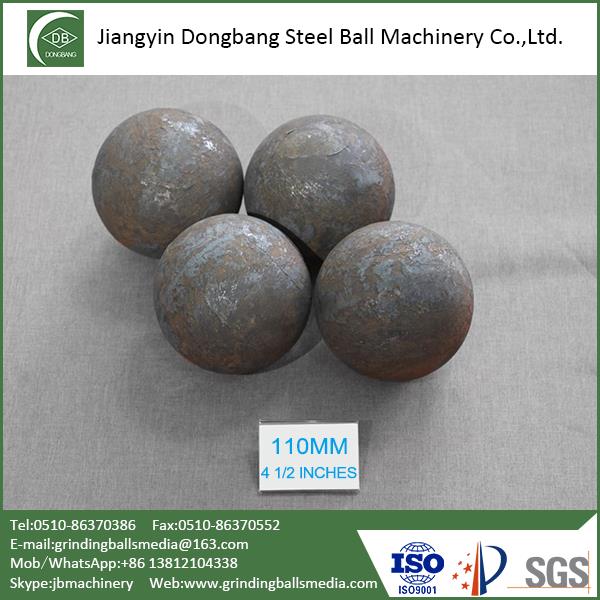
To learn more about our 110mm Grinding Balls Production for Iron Ore Mine or to discuss your grinding ball requirements, please contact us today. We look forward to working with you and helping you achieve your grinding goals.
References
- ASM Handbook Volume 4: Heat Treating. ASM International.
- Steel Heat Treatment: Metallurgy and Technologies. George E. Totten, David Scott MacKenzie.