

What is the forging cycle time of Quick Forging Machines?
Dec 08, 2025
Hey there! As a supplier of Quick Forging Machines, I often get asked about the forging cycle time of these machines. It's a crucial aspect that many folks in the forging industry are keen to understand. So, let's dive right into it and break down what the forging cycle time of Quick Forging Machines is all about.
First off, what exactly is the forging cycle time? Well, it's the total time it takes for a forging machine to complete one full forging cycle. This cycle typically includes a series of steps like loading the raw material, performing the forging operations (hammering, pressing, etc.), and then unloading the finished or semi - finished forged part.
The forging cycle time of Quick Forging Machines can vary significantly depending on several factors. One of the most important factors is the type of forging operation. For example, if it's a simple upsetting operation, where the metal is compressed axially to increase its diameter, the cycle time might be relatively short. On the other hand, more complex operations like multi - step forging, which involve shaping the metal into a detailed and intricate part, can take much longer.
The size and shape of the workpiece also play a huge role. Larger workpieces generally require more time to forge because they need more energy and more hammer blows or press strokes to achieve the desired shape and density. Similarly, workpieces with complex geometries will demand additional operations and time compared to those with simple shapes.
The material being forged is another key factor. Different metals have different mechanical properties. For instance, forging a soft metal like aluminum is much quicker than forging a high - strength alloy steel. Steel alloys often require higher forging temperatures and more force to deform, which naturally increases the forging cycle time.
Now, let's talk about how Quick Forging Machines are designed to optimize this cycle time. These machines are equipped with advanced hydraulic or mechanical systems that can deliver high - speed and high - energy forging blows. They're built to be efficient, with fast - acting rams and precise control systems. This allows them to perform forging operations in a shorter amount of time compared to traditional forging machines.
Some Quick Forging Machines are also designed with automated loading and unloading systems. These systems can quickly move the workpieces in and out of the forging area, reducing the non - forging time in the cycle. This is a huge advantage as it allows the machine to focus more on the actual forging process and less on the handling of the parts.
In addition, modern Quick Forging Machines come with programmable logic controllers (PLCs) that can precisely control the forging parameters such as the force, speed, and number of blows. This ensures that the forging process is consistent and efficient, further reducing the cycle time.
When it comes to real - world applications, the forging cycle time of Quick Forging Machines can have a significant impact on the overall productivity of a forging plant. A shorter cycle time means that more parts can be produced in a given period, which directly translates to higher output and potentially higher profits.
For example, in the automotive industry, where large quantities of forged components like crankshafts, connecting rods, and gears are needed, Quick Forging Machines with short cycle times are essential. They can keep up with the high - volume production demands and ensure that the supply chain runs smoothly.

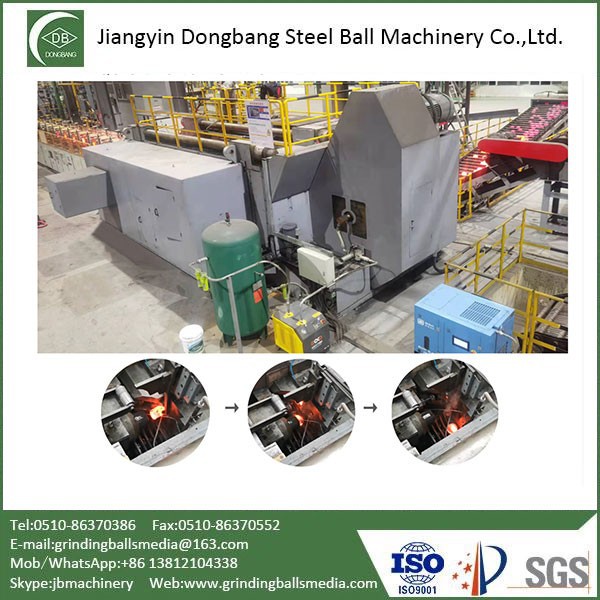
In the aerospace industry, where precision and quality are of utmost importance, Quick Forging Machines can still play a vital role. Even though the workpieces are often complex and made from high - performance alloys, the ability to optimize the forging cycle time without sacrificing quality is a huge advantage.
If you're in the market for a Quick Forging Machine, you might want to check out our Quick Forging Machines. These machines are designed to offer excellent performance and efficiency, with a focus on reducing the forging cycle time.
We also have a High - Speed Forging Machine For Alloy Industries that's specifically tailored for forging high - strength alloys. It's capable of handling the tough requirements of alloy forging while still maintaining a relatively short forging cycle time.
To sum it up, the forging cycle time of Quick Forging Machines is a complex but important metric. It's influenced by factors like the forging operation, workpiece size and shape, and the material being forged. However, with the advanced features and technologies of modern Quick Forging Machines, it's possible to significantly reduce this cycle time and improve the overall productivity of your forging operations.
If you're interested in learning more about our Quick Forging Machines or want to discuss how they can meet your specific forging needs, don't hesitate to reach out. We're here to help you make the right choice and boost your forging business.
References:
- Forging Technology Handbook, by ASM International
- Metal Forming: Processes and Applications, by David A. Dieter