

How to determine the best type of grinding balls for a specific material?
Dec 11, 2025
Determining the best type of grinding balls for a specific material is a crucial decision in many industrial processes, especially in mining, cement production, and other sectors where grinding is a key operation. As a grinding balls supplier, I've witnessed firsthand the impact that the right choice of grinding balls can have on the efficiency, productivity, and cost - effectiveness of a grinding operation. In this blog, I'll share some insights on how to make this important determination.
Understanding the Material to be Ground
The first step in choosing the best grinding balls is to have a comprehensive understanding of the material you're dealing with. Different materials have different hardness, abrasiveness, and chemical properties, all of which influence the performance of grinding balls.
Hardness
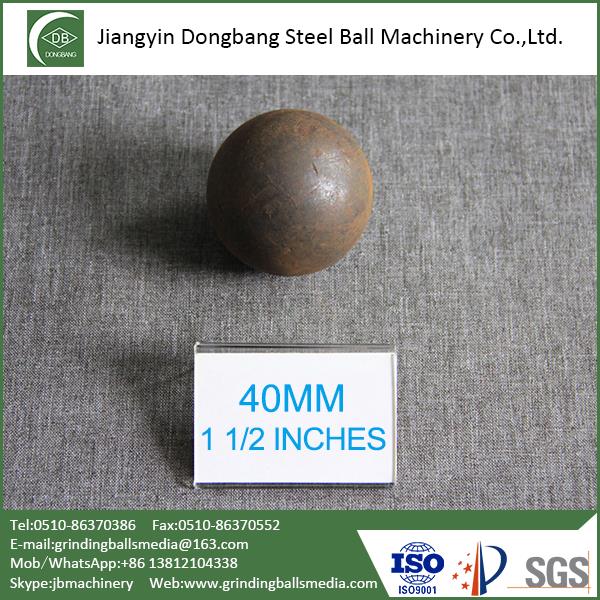
Hardness is one of the most critical factors. If the material is very hard, such as quartz or certain types of iron ore, you'll need grinding balls that can withstand the high - stress environment without excessive wear. For example, forged steel balls are often a good choice for hard materials because they typically have high hardness and good wear resistance. Our 40mm Forged Grinding Ball for Iron Ore Mine is specifically designed to handle the tough conditions of iron ore grinding. These balls are forged to achieve a high level of hardness, which allows them to break down the hard iron ore particles effectively.
Abrasiveness
Abrasive materials can quickly wear down grinding balls. Materials like sand or some types of volcanic rock are highly abrasive. In such cases, you may need grinding balls with a high - chromium content. High - chromium grinding balls have excellent abrasion resistance due to the formation of hard chromium carbides in their microstructure. They can maintain their shape and size for a longer time when grinding abrasive materials, reducing the frequency of ball replacement and improving the overall grinding efficiency.
Chemical Properties
The chemical composition of the material can also affect the choice of grinding balls. For instance, if the material is acidic, it may react with certain types of grinding balls, causing corrosion. In this situation, stainless - steel grinding balls can be a suitable option as they have good corrosion resistance. On the other hand, for materials with a high sulfur content, special alloy grinding balls may be required to prevent sulfur - induced embrittlement.
Considering the Grinding Process
The type of grinding process also plays a significant role in determining the best grinding balls.
Ball Mill Type
There are different types of ball mills, such as overflow ball mills, grate - discharge ball mills, and autogenous mills. Each type has its own characteristics and operating conditions. In an overflow ball mill, the grinding balls are in a relatively gentle grinding environment compared to a grate - discharge ball mill, where the balls are subject to more intense impact and abrasion. For a grate - discharge ball mill used in an iron ore mine, our 60mm Forged Steel Balls for Iron Ore Mine are a great option. Their larger size and high - strength properties make them suitable for withstanding the high - energy impacts in this type of mill.
Grinding Ratio
The grinding ratio, which is the ratio of the size of the feed material to the size of the product, is another important factor. If a high grinding ratio is required, smaller grinding balls may be more effective as they can provide a larger surface area for contact with the material. However, if the material is very coarse and needs to be broken down quickly, larger balls may be more appropriate initially.
Operating Conditions
The operating conditions of the grinding process, such as the rotational speed of the mill, the filling rate of the grinding balls, and the temperature, also need to be considered. High rotational speeds can increase the impact force on the grinding balls, so balls with high toughness are required to prevent breakage. A high filling rate of grinding balls can lead to more frequent collisions between the balls, which may also require balls with good wear and impact resistance.
Evaluating the Performance of Grinding Balls
Once you have selected a potential type of grinding balls, it's important to evaluate their performance in your specific application.
Wear Rate
The wear rate of grinding balls is a key performance indicator. You can measure the wear rate by weighing the balls before and after a certain period of grinding operation. A low wear rate indicates that the balls are durable and can save you money in the long run by reducing the need for frequent ball replacement.
Grinding Efficiency
Grinding efficiency can be evaluated by measuring the particle size distribution of the ground product. A good set of grinding balls should be able to produce a product with the desired particle size distribution in a relatively short time. If the grinding efficiency is low, it may be necessary to adjust the type or size of the grinding balls.
Impact Resistance
Impact resistance is crucial, especially in applications where the grinding balls are subject to high - energy impacts. You can assess the impact resistance by observing the number of broken balls during the grinding process. Balls with poor impact resistance are more likely to break, which can not only reduce the grinding efficiency but also cause damage to the mill.
Cost - Benefit Analysis
In addition to performance, cost is also an important consideration. While high - quality grinding balls may have a higher upfront cost, they can often provide better long - term value due to their lower wear rate and higher grinding efficiency.
Initial Cost
The initial cost of grinding balls includes the purchase price and the cost of transportation. Different types of grinding balls have different price ranges. For example, high - chromium grinding balls are generally more expensive than low - carbon steel balls. However, you need to consider the overall cost in the context of the expected performance.

Operating Cost
The operating cost mainly consists of the cost of ball replacement and the energy consumption of the grinding process. Balls with a low wear rate can reduce the frequency of ball replacement and therefore lower the operating cost. Additionally, more efficient grinding balls can also reduce the energy consumption of the mill, resulting in further cost savings.
Conclusion
Determining the best type of grinding balls for a specific material is a complex process that requires a comprehensive understanding of the material, the grinding process, and the performance and cost of the grinding balls. As a grinding balls supplier, we offer a wide range of products, including 40mm Forged Grinding Ball for Iron Ore Mine, Steel Balls for Silver Ore Mine, and 60mm Forged Steel Balls for Iron Ore Mine, to meet the diverse needs of our customers.
If you're looking for the right grinding balls for your specific application, we're here to help. Our team of experts can provide you with professional advice and guidance based on your unique requirements. Contact us to start a procurement discussion and find the best grinding ball solution for your business.
References
- "Mineral Processing Design and Operations: An Introduction" by Barry A. Wills and Tim Napier - Munn.
- "Ball Milling Theory and Practice for the Amateur Pyrotechnician" by Lloyd S. Bromley.
- Industry reports on grinding ball manufacturing and application.