

What is the hardness requirement for grinding media balls in different applications?
Oct 13, 2025
Grinding media balls are essential components in various industrial grinding processes. They are used to crush and grind materials into finer particles, playing a crucial role in industries such as mining, cement production, and chemical manufacturing. The hardness of grinding media balls is a key factor that significantly influences their performance and suitability for different applications. As a grinding media balls supplier, understanding the hardness requirements for different applications is vital to providing the most appropriate products to our customers.
Hardness and Its Importance in Grinding Media Balls
Hardness is a measure of a material's resistance to deformation, indentation, or scratching. In the context of grinding media balls, hardness determines their ability to withstand the abrasive forces encountered during the grinding process. A harder grinding media ball will generally have better wear resistance, which means it will last longer and maintain its shape and size more effectively. This, in turn, can lead to more consistent grinding performance and reduced downtime for ball replacement.
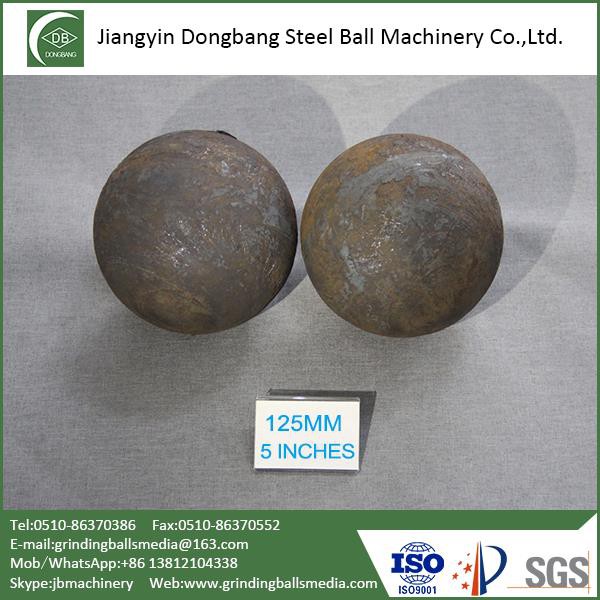
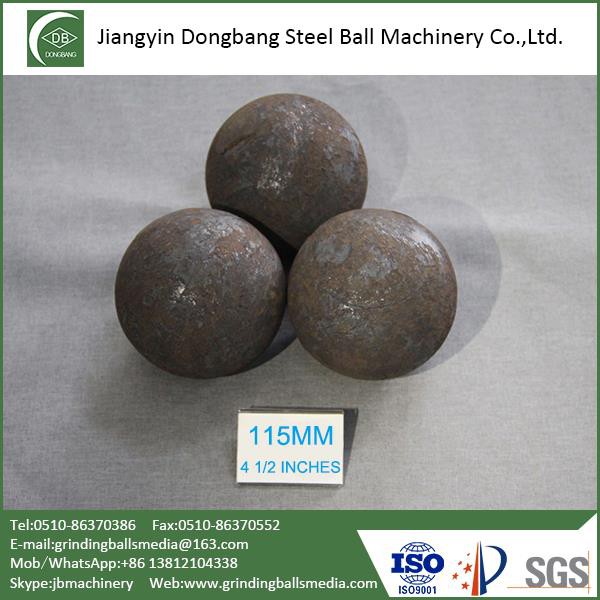
The hardness of grinding media balls is typically measured using the Rockwell hardness scale (HRC) or the Brinell hardness scale (HB). These scales provide a standardized way to compare the hardness of different materials. For grinding media balls, the hardness values can vary widely depending on the material composition and the manufacturing process.
Hardness Requirements in Mining Applications
Gold and Silver Ore Mining
In gold and silver ore mining, the grinding process is crucial for liberating the precious metals from the host rock. The hardness of the grinding media balls used in this application needs to be carefully selected to ensure efficient grinding and minimal wear.
For gold and silver ore grinding, medium to high - hardness grinding media balls are often preferred. A hardness range of 55 - 65 HRC is commonly used. These harder balls can effectively break down the hard ore particles, which are often composed of quartz and other abrasive minerals. For example, our 80mm Media Ball for Silver Ore Mine Mineral Processing is designed with a suitable hardness to handle the tough conditions in silver ore grinding. The high hardness allows the balls to maintain their shape and size during the long - term grinding process, reducing the frequency of ball replacement and improving the overall efficiency of the mineral processing operation.
Iron Ore Mining
Iron ore mining involves large - scale grinding operations to prepare the ore for further processing. The hardness requirements for grinding media balls in iron ore mining are also significant.
In iron ore grinding, the ore is usually relatively hard, and the grinding media balls need to have sufficient hardness to break down the ore particles. A hardness range of 50 - 60 HRC is commonly used. Our 25mm Grinding Balls Production for Iron Ore Mine is tailored to meet the specific hardness requirements of iron ore grinding. The balls are made from high - quality materials and processed to achieve the optimal hardness, which ensures efficient grinding and long service life. The harder balls can withstand the high - impact forces generated during the grinding process, reducing the risk of ball breakage and improving the grinding efficiency.
Hardness Requirements in Cement Production
Cement production is another major industry that relies on grinding media balls. In the cement manufacturing process, raw materials such as limestone, clay, and iron ore are ground into a fine powder before being heated in a kiln to produce clinker.
The hardness requirements for grinding media balls in cement production are relatively high. A hardness range of 58 - 65 HRC is often required. The high hardness is necessary because the raw materials used in cement production are often very abrasive. The grinding media balls need to be able to withstand the continuous abrasion and impact forces during the grinding process. Our Forged Steel Grinding Media Balls are an excellent choice for cement production. The forged steel construction ensures high hardness and good wear resistance, which can significantly improve the grinding efficiency and reduce the production cost in the cement manufacturing process.
Hardness Requirements in Chemical Manufacturing
In chemical manufacturing, grinding media balls are used to grind various chemicals and pigments to achieve the desired particle size. The hardness requirements in this application can vary depending on the specific chemicals being ground.
For some soft chemicals, medium - hardness grinding media balls with a hardness range of 50 - 55 HRC may be sufficient. However, for more abrasive chemicals or those that require a very fine particle size, high - hardness grinding media balls with a hardness of 60 - 65 HRC are often needed. The high - hardness balls can effectively break down the chemical particles and prevent contamination from ball wear.
Factors Affecting Hardness Selection
Ore or Material Characteristics
The hardness, abrasiveness, and particle size of the ore or material being ground are the primary factors affecting the hardness selection of grinding media balls. Harder and more abrasive materials require higher - hardness grinding media balls to ensure efficient grinding and long service life.
Grinding Equipment
The type and design of the grinding equipment also play a role in hardness selection. For example, in a ball mill with a high - speed rotation, the grinding media balls are subjected to higher impact forces, and thus, higher - hardness balls may be required to withstand these forces.
Cost Considerations
Cost is always an important factor in any industrial application. Higher - hardness grinding media balls are generally more expensive to produce. Therefore, a balance needs to be struck between the hardness requirements and the cost. Sometimes, a slightly lower - hardness ball may be acceptable if it can still meet the grinding requirements at a lower cost.
Conclusion
As a grinding media balls supplier, we understand that the hardness of grinding media balls is a critical factor in different applications. By carefully considering the specific requirements of each application, we can provide our customers with the most suitable grinding media balls. Whether it is for gold and silver ore mining, iron ore mining, cement production, or chemical manufacturing, we have a range of products with different hardness levels to meet the diverse needs of our customers.
If you are looking for high - quality grinding media balls for your specific application, we invite you to contact us for a detailed discussion. Our team of experts is ready to assist you in selecting the most appropriate grinding media balls based on your requirements.
References
- "Handbook of Mineral Processing" by N. Misra.
- "Cement Manufacturing Technology" by P. Kumar Mehta.
- "Chemical Engineering Handbook" by Perry and Green.