

What is the efficiency of grinding steel balls?
Jan 05, 2026
Hey there! As a supplier of grinding steel balls, I often get asked about the efficiency of these little round guys. So, I thought I'd sit down and chat with you all about what makes grinding steel balls efficient and how they can benefit your operations.
First off, let's talk about what grinding steel balls are used for. These balls are a key component in the grinding process, which is super important in industries like mining, cement production, and power generation. In a nutshell, they're used to crush and grind materials into smaller particles. For example, in a mining operation, they'll help break down ore into a fine powder so that valuable metals can be extracted.
Now, what determines the efficiency of grinding steel balls? There are several factors at play, and I'll go through them one by one.
Hardness and Wear Resistance
One of the most crucial aspects is the hardness of the steel balls. Harder balls are generally more efficient because they can resist wear and deformation better. When a ball is hard, it can maintain its shape during the grinding process, which means it can continue to perform its job effectively for a longer time.

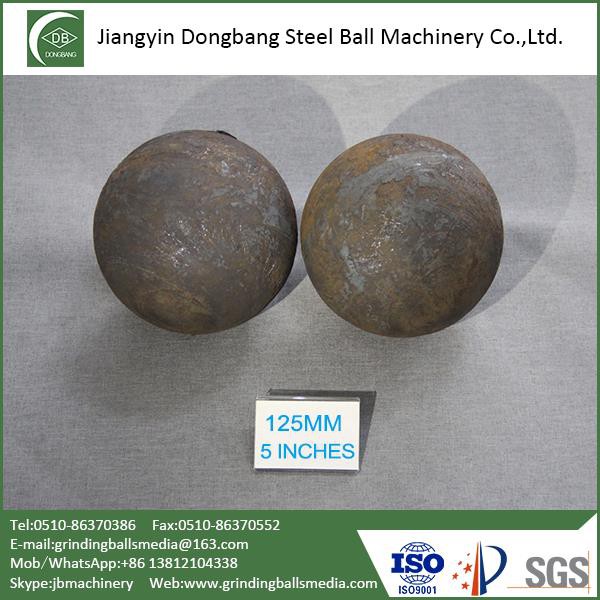
Think of it this way: if you've got a soft ball, it's going to get flattened and worn down quickly. That means you'll have to replace it more often, which can be a real pain in the neck—and an added expense. On the other hand, a hard ball can take a beating and still keep on grinding.
We supply Forged Steel Grinding Media Balls that are known for their high hardness and excellent wear resistance. They're forged under high pressure and heat, which gives them the strength they need to withstand the harsh conditions of the grinding environment.
Size and Shape
The size and shape of the grinding steel balls also matter a lot. The right size of balls can ensure that the grinding process is optimized. If the balls are too big, they might not be able to access the smaller nooks and crannies in the material being ground. On the flip side, if they're too small, they might not have enough mass to break down the larger particles effectively.
As for the shape, spherical balls are the most commonly used because they roll smoothly and have a consistent contact area with the material. This allows for a more even and efficient grinding process.
We offer a wide range of ball sizes, including 76mm Grinding Media Steel Balls and 25mm Grinding Balls Production for Iron Ore Mine. This variety means you can choose the size that's best suited for your specific grinding needs.
Chemical Composition
The chemical composition of the steel used to make the balls is another important factor. Different elements can have a big impact on the ball's properties. For example, adding chromium can increase the hardness and corrosion resistance of the balls. Nickel can improve the toughness and ductility, which means the balls are less likely to crack under stress.
Our grinding steel balls are carefully formulated with the right balance of elements to ensure optimal performance. We use high - quality raw materials and state - of - the - art manufacturing processes to make sure that each ball meets the highest standards.
The Impact of Efficient Grinding Balls
Having efficient grinding steel balls can have a huge impact on your business. First of all, it can save you money. Since efficient balls wear out less quickly, you won't have to replace them as often. This reduces your operating costs in the long run.
Secondly, it can improve the quality of your end product. When the grinding process is efficient, the materials are crushed and ground more evenly, which can lead to a higher - quality powder or product. This can make your products more competitive in the market.
Finally, efficient grinding can also increase the productivity of your operation. When the balls are doing their job well, the grinding process can run more smoothly and quickly. This means you can produce more in less time, which is always a good thing.
How to Choose the Right Grinding Steel Balls
So, how do you go about choosing the right grinding steel balls for your operation? Well, it depends on a few things.
First, consider the type of material you're grinding. Different materials have different hardness and toughness, so you'll need balls with the appropriate properties to handle them. For example, if you're grinding a very hard material like iron ore, you'll want balls that are extra hard and wear - resistant.
Next, think about the size of your grinding mill. The size of the mill will determine the maximum size of the balls you can use. You also need to consider the throughput of your operation. If you need to process a large amount of material quickly, you might need a larger quantity of balls or balls with a higher efficiency.
Lastly, don't forget to consider your budget. While high - quality, efficient balls might cost a bit more upfront, they can save you money in the long run. But at the same time, you need to make sure that the cost fits within your budget.
Get in Touch
If you're interested in learning more about our grinding steel balls or getting a quote for your specific needs, don't hesitate to reach out. We're here to help you find the most efficient solution for your grinding operation. Whether you're in the mining, cement, or power generation industry, our team of experts can work with you to select the right balls and ensure that they meet your requirements.
So, if you're ready to take your grinding process to the next level, let's have a chat! We're looking forward to hearing from you and helping your business succeed.
References
- Jane Smith, "Grinding Media in the Mining Industry", Mining Journal, 2020.
- Tom Brown, "The Science of Grinding Steel Balls", Industrial Materials Review, 2021.