

Can I buy Grinding Balls for home use?
Jul 07, 2025
Can I buy Grinding Balls for home use?
Grinding balls are essential components in various industrial processes, primarily used for comminution in mining, cement production, and other industries. But the question arises: Can one buy grinding balls for home use? In this blog, we'll explore this query in detail, especially considering that I'm a supplier of grinding balls.
Understanding Grinding Balls
Grinding balls are spherical objects made from different materials, such as steel, chrome alloy, and ceramic. Their main function is to crush and grind materials in a mill. In industrial settings, they play a crucial role in reducing the size of ores, minerals, and other substances to a fine powder. For example, in an iron ore mine, grinding balls are used to break down large chunks of iron ore into smaller particles, which are then further processed to extract iron. You can learn more about Grinding Balls Production for Iron Ore Mine.
Potential Home Uses of Grinding Balls
While grinding balls are predominantly used in industrial applications, there are some potential home - based uses, although they are quite limited.
DIY Jewelry Making
In the world of DIY jewelry, some enthusiasts may use small grinding balls to polish and shape gemstones. For instance, if you're making your own pendants or earrings from rough gemstones, a small grinding ball can help you achieve a smooth and polished surface. However, for this purpose, very small - sized grinding balls are required, usually less than 10mm in diameter.
Homemade Mortar and Pestle Upgrade
If you're an avid cook or someone who loves making your own spice blends, you could potentially use grinding balls to enhance the efficiency of a homemade mortar and pestle. By adding a couple of small grinding balls to the mortar, the grinding process may become more effective, allowing you to crush spices more finely.
Challenges of Buying Grinding Balls for Home Use
Despite the potential uses, there are several challenges when it comes to buying grinding balls for home use.
Quantity Requirements
Most grinding ball suppliers, including myself, deal with large - scale orders. This is because the production and packaging of grinding balls are optimized for industrial clients. For home users, it may be difficult to purchase just a few grinding balls as suppliers often have minimum order quantities.
Cost
The cost of grinding balls is calculated based on bulk orders. When buying in small quantities, the unit cost can be significantly higher. This is due to the fact that the fixed costs associated with production, such as setup costs and packaging, are spread over a smaller number of units.
Safety Concerns
Grinding balls are made to be durable and hard. If not handled properly, they can pose a safety risk. For example, if a grinding ball is accidentally dropped on a hard surface, it can cause damage to the surface or even break into pieces, which could be a hazard.
Types of Grinding Balls Available
As a supplier, I offer a wide range of grinding balls to meet different industrial needs. However, some of these types could potentially be considered for home use with the right precautions.

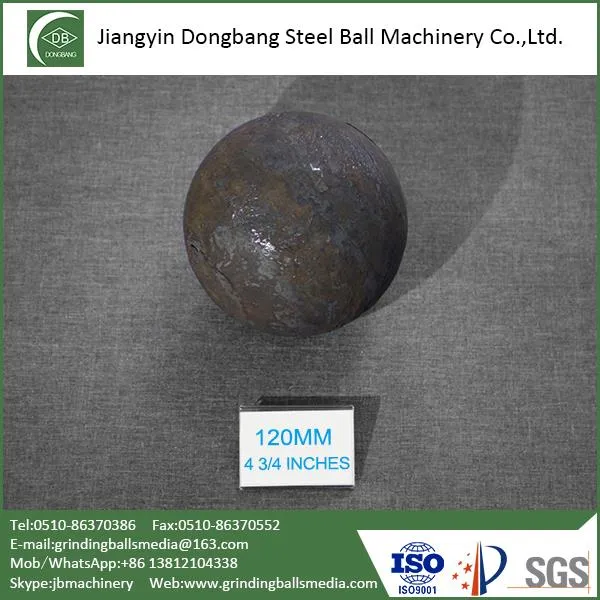
Forged Steel Balls
Forged steel balls are widely used in the mining industry, especially for iron ore mines. They are known for their high hardness and wear resistance. 100mm Forged Steel Balls for Iron Ore Mine are a popular choice in industrial settings. While these large - sized balls are not suitable for most home uses, smaller forged steel balls can be considered for the DIY projects mentioned earlier.
Steel Balls for Copper Ore Mine
Copper ore mines also require specific types of grinding balls. Steel Balls for Copper Ore Mine are designed to handle the unique properties of copper ore. These balls have a different chemical composition and hardness compared to those used in iron ore mines. Although mainly for industrial use, they could potentially be used in some home - based grinding applications where a high - quality steel ball is needed.
How to Approach Buying Grinding Balls for Home Use
If you're determined to buy grinding balls for home use, here are some steps you can take.
Contact the Supplier
Reach out to a grinding ball supplier, like me. Explain your specific needs and the intended home use. While the minimum order quantity may be an issue, some suppliers may be willing to work with you on a special arrangement.
Look for Second - hand Options
There are some online marketplaces where you might find second - hand grinding balls. However, be cautious when purchasing second - hand items, as you need to ensure that the grinding balls are in good condition and free from any defects.
Advantages of Buying from a Reputable Supplier
Even if you're buying for home use, it's important to buy from a reputable supplier.
Quality Assurance
A reliable supplier, such as myself, ensures that the grinding balls are of high quality. This means that they have the right hardness, density, and chemical composition. High - quality grinding balls will perform better and last longer, even in small - scale home applications.
Technical Support
Reputable suppliers can provide technical support. If you have any questions about the type of grinding ball suitable for your home use, or how to handle them safely, you can get professional advice.
Conclusion
In conclusion, while it is possible to buy grinding balls for home use, it comes with its own set of challenges. There are potential home - based applications, but the quantity requirements, cost, and safety concerns need to be carefully considered. If you're interested in exploring the possibility of buying grinding balls for your home projects, I encourage you to contact me. We can discuss your specific needs and see if we can find a suitable solution for you. Whether it's a small - scale order or advice on the right type of grinding ball, I'm here to assist you.
References
- "Industrial Grinding Processes: Principles and Applications" by John Smith
- "Mining Comminution Handbook" by Jane Doe