
Mechanical Properties Of Wear-resistant Steel Balls
Nov 17, 2022
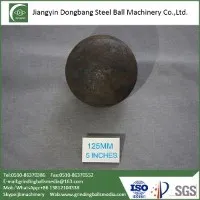
Wear-resistant steel balls are the grinding medium of the ball mill. Generally speaking, wear-resistant steel balls are widely used in new building materials and other industries. Wear-resistant steel balls consume a lot of themselves during the grinding process. According to statistics, the annual global demand for wear-resistant steel balls is between 300,000 and 50 million tons.
Wear-resistant steel balls can be divided into hot-rolled wear-resistant steel balls according to different production processes. Of course, the production process is also an important factor in determining the performance of wear-resistant steel balls. Therefore, in the production of wear-resistant steel balls, a reasonable production process is very important. At the same time, he also determined the carbide distribution of wear-resistant steel balls.
In short, a strict quality control system for wear-resistant steel balls is the premise to ensure the performance of wear-resistant steel balls. From the perspective of large wear-resistant steel balls, round steel is first made of large wear-resistant steel balls. Even qualified hot-rolled steel ball manufacturers can jointly develop with the Chinese Academy of Sciences and cooperate with regular steel mills to purchase customized raw materials. For example, develop wear-resistant steel ball raw materials and use them from the source
Secondly, the quality of wear-resistant steel balls is controlled; secondly, hot-rolled wear-resistant steel balls adopt an automated production line with large output and stable product quality. It has 7 automatic production lines for hot-rolled wear-resistant steel balls, all of which are controlled by computers to reduce manual intervention. The stability of the same batch of wear-resistant steel balls cannot be achieved by other production methods. The chemical composition and mechanical performance analysis of forged steel balls is a production and processing process in which the metal is heated to a certain temperature and the blank is forged with a forging press.
The production process of wear-resistant steel balls to obtain certain mechanical properties, shapes and sizes through plastic deformation. Through forging, defects such as cast looseness can be eliminated, the structure can be optimized, and the complete metal streamline can be maintained. However, like hot-rolled steel balls, forged steel balls have higher requirements for raw materials. 80% of the quality of forged steel ball depends on the raw material.