
How to classify steel balls for ball mills
Jan 28, 2022
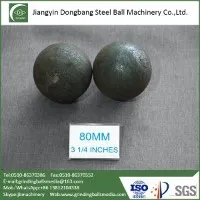
The steel ball of the ball mill is an important basic part of the ball mill and an indispensable part of the ball mill. Under some special conditions, steel balls of special materials are often needed to fulfill the functions required under different environments. Steel balls on the market are generally divided into two types: casting and forging, but their wear resistance is different.
Cast steel balls are used by steel ball manufacturers to heat scrap steel, scrap iron and other waste materials in an intermediate frequency electric furnace to fully melt the charge. During the melting process of the charge, add an appropriate amount of precious metal alloy to the furnace for chemical composition tempering, and wait for the molten iron. After the temperature reaches 1550℃ or higher and the process requirements are met, the qualified molten iron is poured into the steel ball mold or the steel ball production line mold. That is, the steel balls produced by casting and smelting are called cast steel balls.
Forged steel balls are steel balls produced by steel ball manufacturers through direct high-temperature heating and then forging. They do not require melting and casting, but are called forged steel balls after forging. The chromium content of forged steel balls is between 0.1% and 0.5%, and the carbon content is less than 1.0%. Its core hardness is generally only over 30 degrees with poor permeability. Under normal circumstances, forged steel balls are often treated with water quenching.