

How to set the rotational speed during steel ball grinding?
Jul 24, 2025
How to Set the Rotational Speed During Steel Ball Grinding
As a seasoned supplier of grinding steel balls, I've witnessed firsthand the critical role that rotational speed plays in the steel ball grinding process. The right rotational speed can significantly enhance the efficiency, quality, and cost - effectiveness of grinding operations. In this blog, I'll share comprehensive insights on how to set the rotational speed during steel ball grinding.
Understanding the Basics of Rotational Speed in Steel Ball Grinding
Before delving into the details of setting the rotational speed, it's essential to understand what rotational speed means in the context of steel ball grinding. Rotational speed refers to the number of revolutions a grinding mill makes per unit of time, usually measured in revolutions per minute (RPM).
In a grinding mill, steel balls are used as grinding media. As the mill rotates, the steel balls are lifted and then fall, impacting and crushing the material to be ground. The rotational speed determines how the steel balls move within the mill, which, in turn, affects the grinding efficiency.
Factors Influencing the Rotational Speed Setting
- Mill Type and Design
Different types of grinding mills, such as ball mills, rod mills, and pebble mills, have different optimal rotational speeds. The diameter and length of the mill also play a crucial role. Generally, larger mills may require lower rotational speeds to ensure proper movement of the steel balls. For example, a large - diameter ball mill may need a slower RPM compared to a small - diameter one to prevent the steel balls from centrifuging and losing their grinding action. - Steel Ball Size and Properties
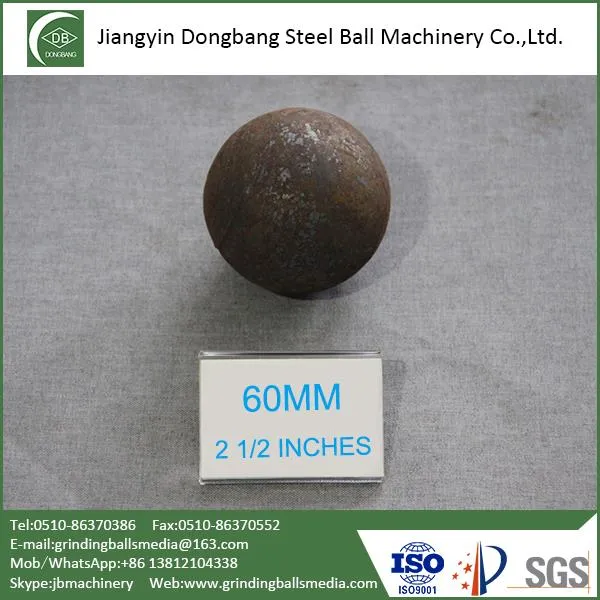
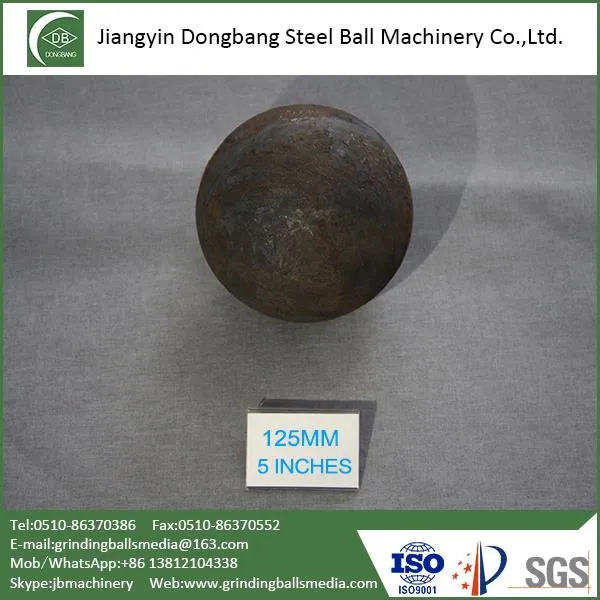
The size, density, and hardness of the steel balls are significant factors. Smaller steel balls can be more effective at fine grinding, but they may require a higher rotational speed to generate sufficient impact force. On the other hand, larger steel balls, like the 125mm Steel Balls for Mining, are better for coarse grinding and may need a lower rotational speed. The density and hardness of the steel balls also affect how they interact with the material being ground and how they move within the mill. - Material to be Ground
The physical and chemical properties of the material, such as its hardness, density, and particle size distribution, influence the rotational speed. Harder materials typically require higher impact forces, which may be achieved by adjusting the rotational speed. For instance, when grinding hard ores, a higher RPM may be necessary to ensure that the steel balls can break down the material effectively. In contrast, softer materials may require a lower rotational speed to avoid over - grinding and excessive wear on the steel balls.
Methods for Determining the Optimal Rotational Speed
- Theoretical Calculations
There are several theoretical formulas available to estimate the optimal rotational speed of a grinding mill. One of the most well - known is the critical speed formula. The critical speed ($N_c$) of a ball mill is given by the formula:
[N_c=\frac{42.3}{\sqrt{D}}]
where $D$ is the internal diameter of the mill in meters. However, the actual operating speed is usually a fraction (around 65% - 80%) of the critical speed. This is because operating at the critical speed would cause the steel balls to centrifuge, adhering to the inner wall of the mill and losing their grinding function. - Experimental Testing
Conducting small - scale experimental tests is an effective way to determine the optimal rotational speed. By varying the rotational speed in a laboratory - scale mill and analyzing the grinding results, such as the particle size distribution of the ground material and the energy consumption, the most suitable RPM can be identified. This approach allows for a more accurate adjustment based on the specific materials and steel balls used in the actual production process. - Simulation and Modeling
With the advancement of computer technology, simulation and modeling software can be used to predict the behavior of steel balls within the mill at different rotational speeds. These tools can simulate the movement of the steel balls, the impact forces, and the grinding efficiency, providing valuable insights for setting the rotational speed.
Practical Considerations for Setting the Rotational Speed
- Gradual Adjustment
When changing the rotational speed in a production - scale mill, it's advisable to make gradual adjustments. Sudden changes in RPM can cause instability in the grinding process, leading to uneven grinding results and potential damage to the mill and the steel balls. A step - by - step approach allows the system to adapt and ensures that the optimal speed can be reached without significant disruptions. - Monitoring and Control
Continuous monitoring of the grinding process is essential. Parameters such as the power consumption of the mill, the temperature, and the particle size distribution of the output material should be regularly checked. If there are any abnormal changes, the rotational speed may need to be adjusted accordingly. Modern mills are often equipped with advanced control systems that can automatically adjust the rotational speed based on real - time data. - Maintenance and Wear
The rotational speed affects the wear rate of the steel balls and the mill lining. Higher rotational speeds generally result in more rapid wear. Therefore, it's important to balance the grinding efficiency with the wear rate. Regular inspection and replacement of worn - out steel balls and mill linings are necessary to maintain the optimal performance of the grinding process.
The Importance of Correct Rotational Speed for Our Grinding Steel Balls
As a supplier of Grinding Media Balls, I understand that the correct rotational speed is crucial for the performance of our products. When the rotational speed is set appropriately, our steel balls can work at their best, providing efficient grinding and longer service life. For example, in Media Balls for Silver Ore Mine Mineral Processing, the right rotational speed ensures that the silver ore is ground to the desired particle size, maximizing the extraction efficiency.
Conclusion
Setting the rotational speed during steel ball grinding is a complex but crucial task. It requires a comprehensive understanding of various factors, including the mill type, steel ball properties, and the material to be ground. By using theoretical calculations, experimental testing, and simulation methods, the optimal rotational speed can be determined. Practical considerations such as gradual adjustment, monitoring, and maintenance are also essential for a successful grinding process.
If you're involved in steel ball grinding operations and are looking for high - quality grinding steel balls or need more advice on setting the rotational speed, we're here to help. Contact us to start a discussion about your specific requirements and explore how our products can enhance your grinding efficiency.
References
- "Mineral Processing Design and Operations: An Introduction" by Andrew B. King
- "Ball Milling Theory and Practice for the Amateur Pyrotechnician" by Lloyd S. Smith